
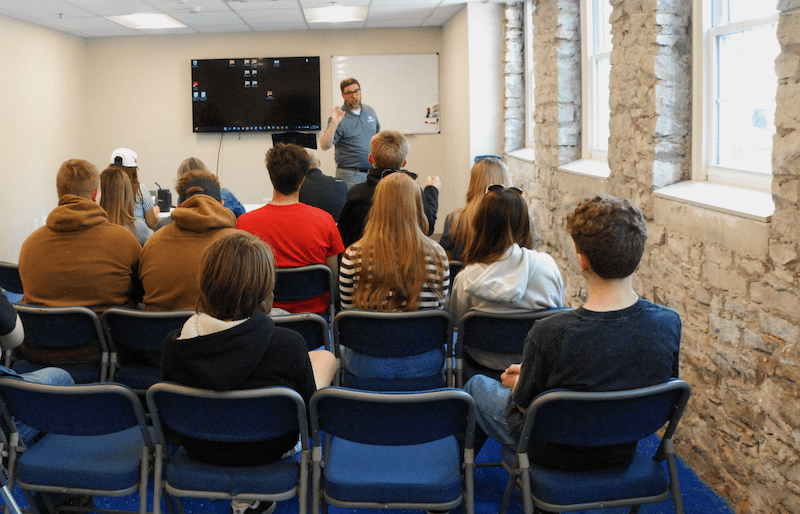
The inaugural year of Next Gen Biz Lab ended with exactly the kind of energy the program was built to create: students thinking like entrepreneurs, presenting real business ideas, and stepping into the confidence it takes to share those ideas with a room full of leaders.
Hosted in partnership with Bourbon Christian Academy, the program’s first year gave students a hands-on opportunity to explore entrepreneurship, develop business concepts, and practice the kind of strategic thinking that helps young leaders grow.
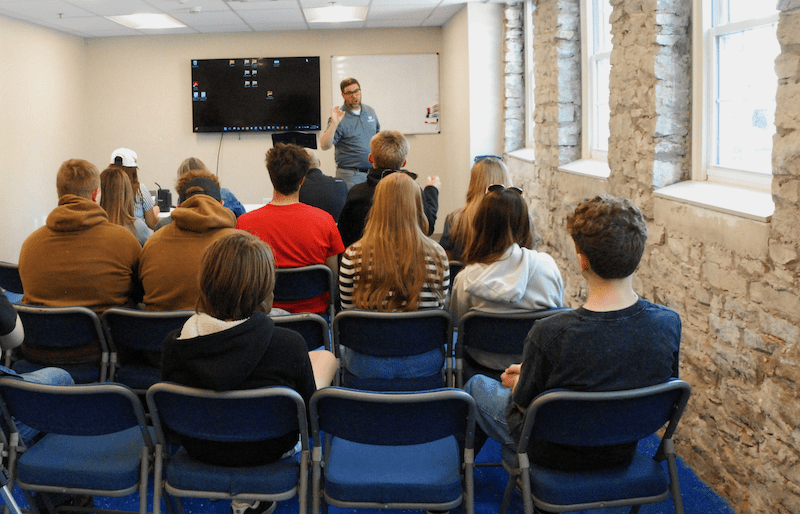
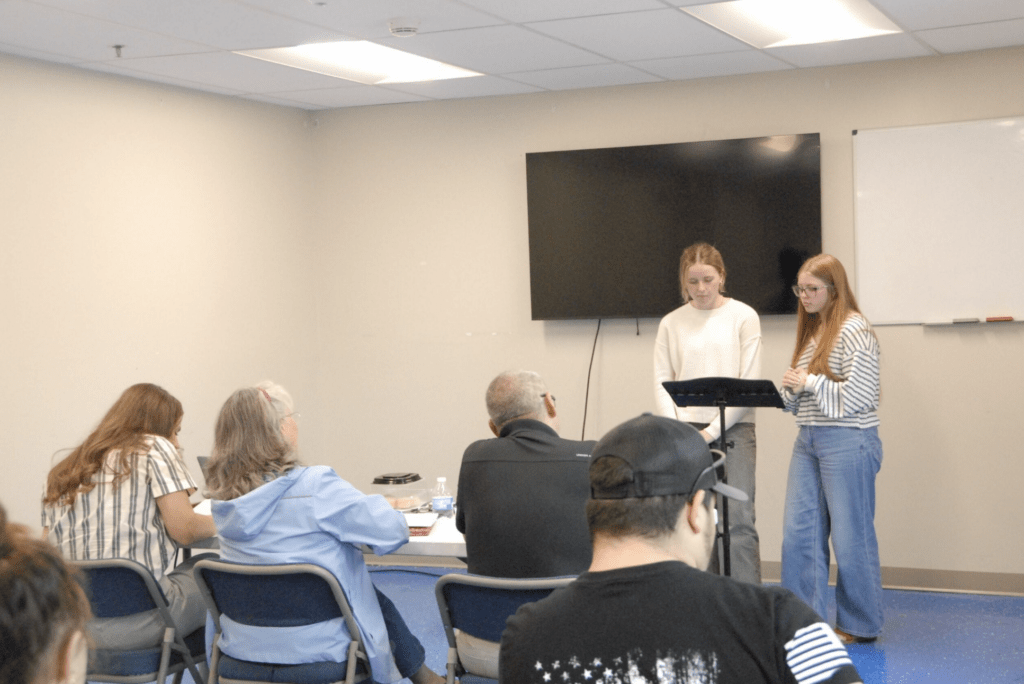
As the 2025–2026 school year came to a close, Next Gen Biz Lab students participated in the program’s first business pitch competition, a pitch-style showcase designed to help students practice business strategy, public speaking, problem-solving, and financial thinking in a hands-on way.
What is the Next Gen Biz Lab?
Next Gen Biz Lab is a student entrepreneurship program designed to inspire, equip, and launch the next generation of business-minded leaders.
Through a meaningful partnership with Bourbon Christian Academy, students spent the school year learning how to move from idea to execution while developing practical skills in business planning, customer discovery, pricing, financial thinking, and public presentation.
The program combines practical instruction, community engagement, and real-world business development so students can build skills they can carry into future careers, businesses, and leadership roles.
Each student business team had five minutes to present their concept to a panel of community leaders and advisory board members. The panel included Victoria Benson, President of Mustard Seed Hill; Terry Smith, Director of Bourbon Christian Academy and Next Gen Advisory Board Member; and Dewayne Hancock, Advisory Board Member.
Students were asked to address four essential business questions:
What does your business do?
What problem are you solving?
Who is your customer?
What are your financials?
The result was a lively and impressive showcase of creativity, strategy, and early-stage entrepreneurship! Student business ideas ranged from custom cookies and restored furniture to classic car repair, gaming computers, photography, 3D printing, landscaping, homeschool curriculum support, and service-based help for busy families.
Breese Brookshire and Evelyn Slattery presented Cookie Canvas, a custom cookie business offering personalized designs such as logos, names, and customer-requested artwork.
Madelyn Linville, Waylon Linville, and Warren Slattery introduced Second Chance Furniture, a restoration business built around the idea that “everyone deserves a nice piece of furniture.”
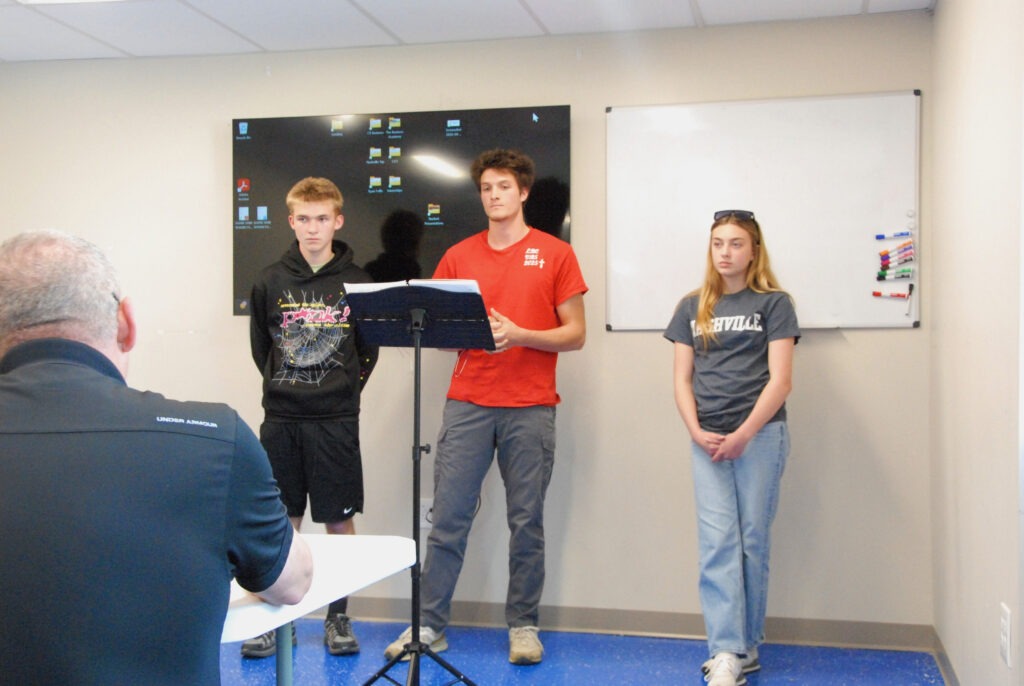
Charlie Pope and Ashton McCarthy presented Pope’s Garage, a business focused on repairing and restoring classic cars.
Preston Parsons and Alex Bugg introduced Covenant Computers, a custom computer-building business designed especially for gaming customers.
Joseph Sidles and Hailey Beatty presented Sweetopia, a fresh baked goods business focused on high-quality treats.
Brynlea Cockrell introduced Made for Homeschool Parents, a service designed to help homeschool families select curriculum that fits their specific needs.
Kenley Berry and Rylee Pope presented Mom’s Helpers, a combined babysitting, home cleaning, and organizing service created to support busy households.
Morgan Kendall and Madelyn Linville introduced Morgalin Patchwork, a custom patchwork business offering original designs and customer-requested patches for hoodies and other clothing.
Brycen Bennett presented Lawn and Order, a mowing and basic landscaping service.
Rae Biddle introduced Golden Grace Studios, a photography business for any occasion.
Alexander Hurst presented Layered Design Workshop, a 3D printing business creating unique gifts and custom pieces.
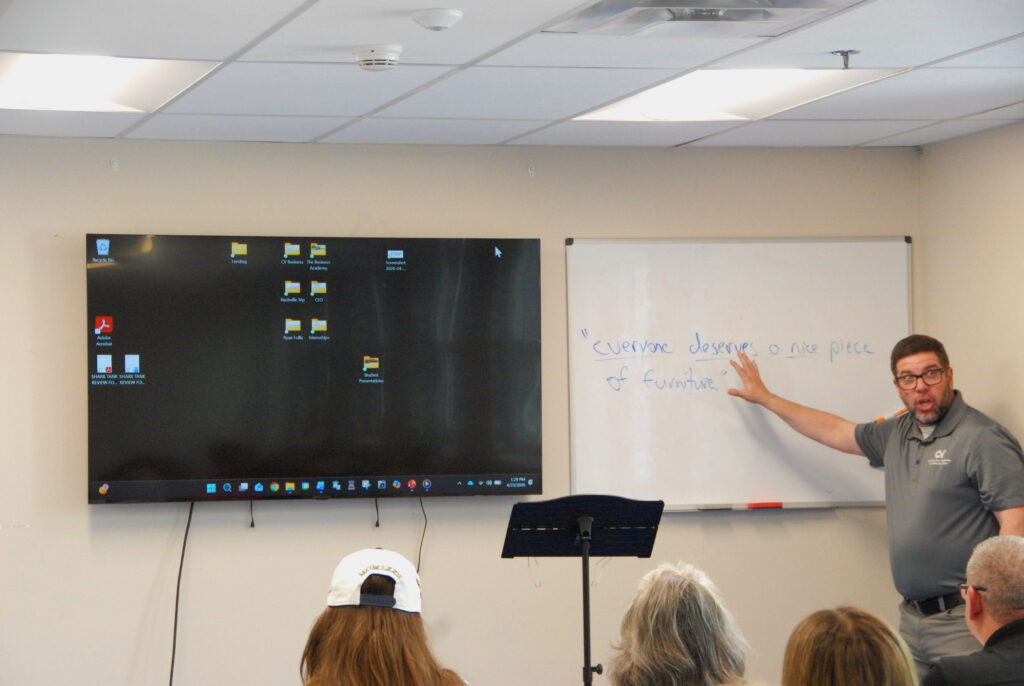
Throughout the presentations, students were encouraged to think beyond the idea itself. They had to consider real customers, real costs, real pricing, and real demand. They were challenged to explain why someone would purchase their product or service, how they knew there was a market for it, and what it would take to make the business financially viable.
The first Next Gen Biz Lab business pitch competition was a strong finish to a meaningful first year, and it offered a glimpse of what the program can become as more students, schools, homeschool groups, and community partners get involved.
The partnership with Bourbon Christian Academy helped bring the inaugural year to life, giving students the classroom foundation, encouragement, and space to begin seeing themselves as entrepreneurs.
Schools or homeschool programs that would like to learn more about Next Gen Biz Lab can email Nathaniel Price at nathaniel.price@cvky.org.