


The City of Millersburg and Millersburg Mayor Julie Hopkins shared exciting news for Millersburg’s future on Thursday, December 11th. The Kentucky Division of Water has awarded the city a $296,000 Sewer Overflow and Stormwater Reuse Municipal Grant to tackle one of Millersburg’s most persistent challenges: stormwater runoff and flooding along Hinkston Creek.
Mayor Hopkins addressed the state and local leaders and residents gathered in one of the town’s meticulously renovated historic buildings to celebrate: “Anyone who knows Millersburg knows this: we are a small town with a big heart — and we have weathered more than our share of storms.
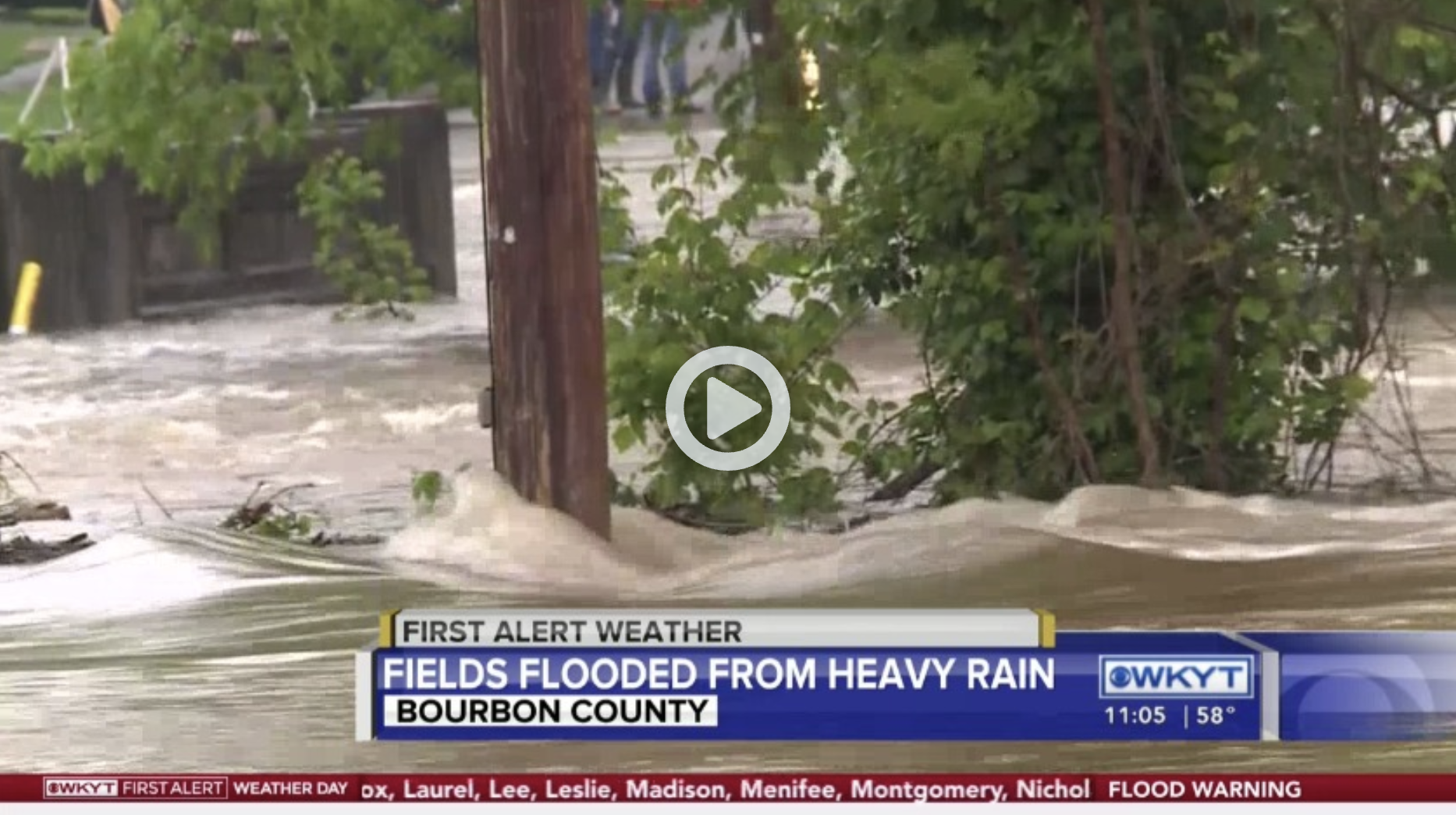
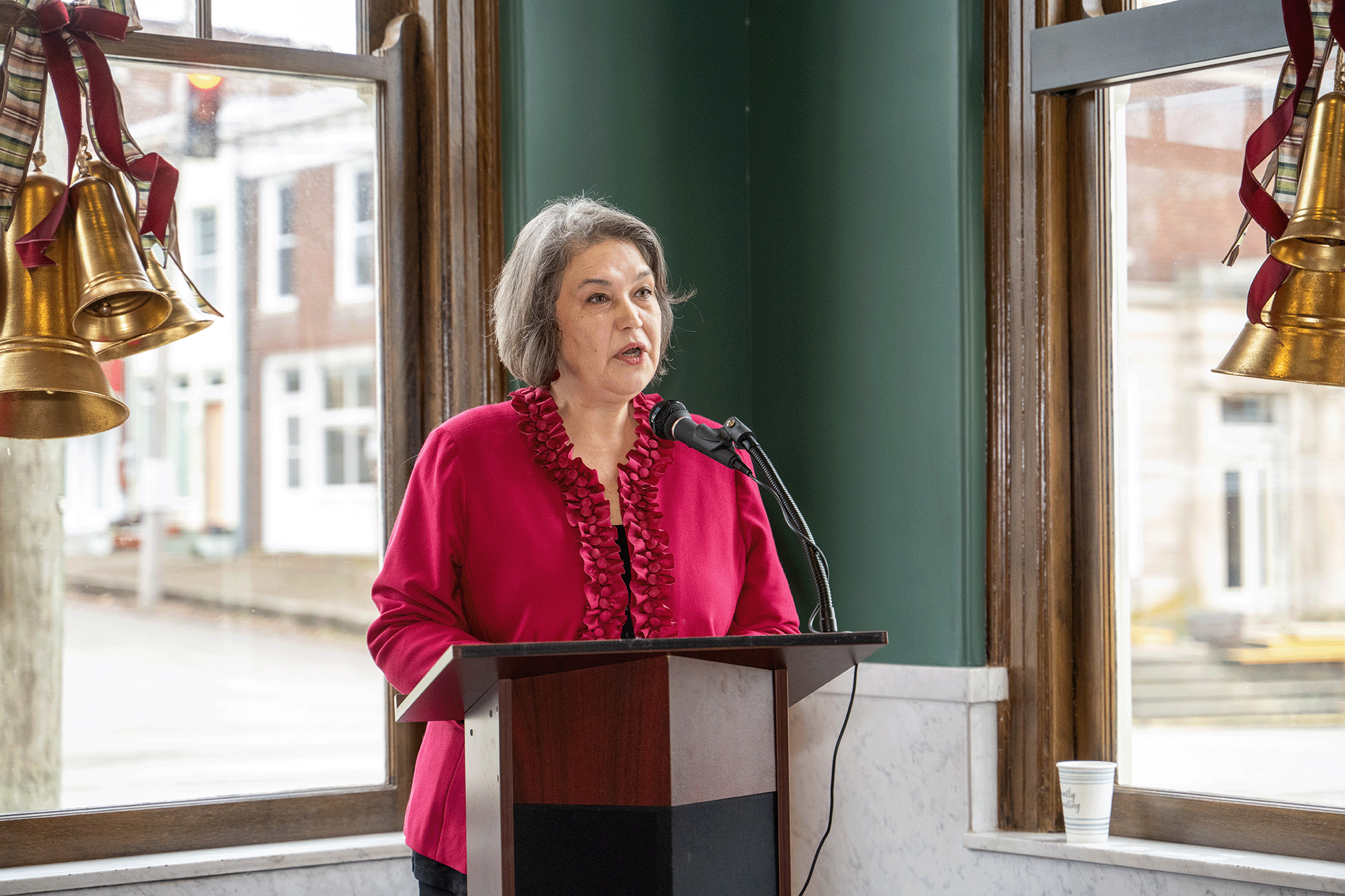
“This community has fought its way through fire, flooding, and setbacks that might have stopped other towns in their tracks. But Millersburg did what Millersburg always does — we stood together, and we moved forward. And today, we take another step toward resiliency and sustainability.”
With the revitalization of Millersburg well underway, this award underpins that ongoing mission by funding an infrastructure project aimed at resilience that includes the planning, design, and construction of improvements aimed at the safety of residents and the protection of the environment.
Specifically, Millersburg will be installing permeable sidewalks and expanding the tree canopy—smart solutions that help absorb and slow down stormwater before it reaches the Hinkston Creek. These changes will reduce the amount of untreated, polluted water that flows into the creek and help lessen flooding during extreme weather events, with the added benefit of community beautification.
Hinkston Creek is currently in poor condition.
The watershed has a C- grade, with over 54 miles of its waterways classified as impaired.
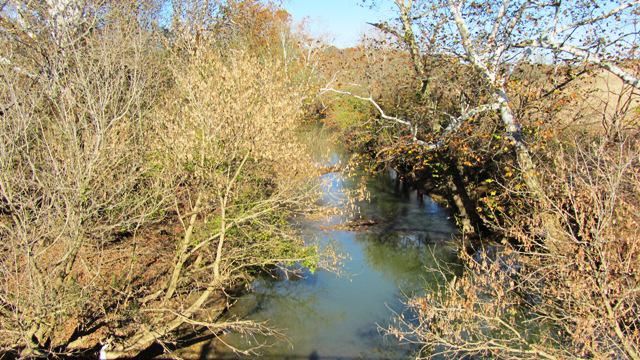
Environmental Scientist Paulette Akers with the Kentucky Division of Water’s Watershed Management Branch, on hand to present the award, explained, “Our mission is to protect the health of communities by protecting the health of their water systems — and that begins with how stormwater moves across the ground. In Millersburg, the vulnerabilities are visible: water pooling at low points after even moderate rainfall, sediment washing across sidewalks, eroded curbs, and runoff that picks up contaminants on its way to Hinkston Creek, part of a watershed that drains approximately 80 square miles across Bourbon, Montgomery, and Nicholas counties.
“That water flows to Stoner Creek, then the South Fork Licking River, and eventually the Ohio River, a source of drinking water for an estimated five million people downstream.”
Hinkston Creek is listed as impaired under the Clean Water Act for pathogens and nutrients. That means any reduction in stormwater pollution here directly improves water quality across a much larger system.
The permeable sidewalks and stormwater-capturing street trees being installed are proven engineering-based tools in modern resiliency-based infrastructure. Permeable pavement can reduce stormwater runoff by 70–95% by allowing rainfall to soak into the ground rather than overwhelm the surface. And a single mature street tree can intercept 760 to over 1,000 gallons of stormwater a year, reducing peak flows and filtering pollutants through its root system.
Essential Help, No Financial Burden on Townspeople
This is precisely the kind of work the Sewer Overflow and Stormwater Reuse Municipal Grant Program was created to support. Through funding from the Infrastructure Investment and Jobs Act, Kentucky has been able to bring these resiliency-focused infrastructure solutions to rural communities.

Senator Steve West, who represents seven Kentucky counties and part of an eighth, is himself a resident of Millersburg. He expressed what it means for the town to not have to choose between safety and solvency:
“Thanks to this grant, rural towns like Millersburg finally have the ability to modernize aging systems without sacrificing their budgets, because it came with no local match — something the Kentucky Division of Water prioritized for rural, disadvantaged, and low-tax-base communities. In a town of fewer than 750 residents, that really matters.”
By protecting both its people and its waterways, Millersburg is setting a strong example for other rural communities across the Commonwealth. And by replacing aged, crumblingsidewalks and improving water quality, Millersburg is building resilience and becoming a safer, more inviting place to live.
Engineered Resilience Changes Outcomes
Bourbon County has been included in three federal disaster declarations in recent years — in 2009, 2011, and 2019 — each one the result of storms that overwhelmed infrastructure that was never designed for the kinds of rainfall we see today. And the financial burden of repairing the damage hits small rural communities like Millersburg hardest.
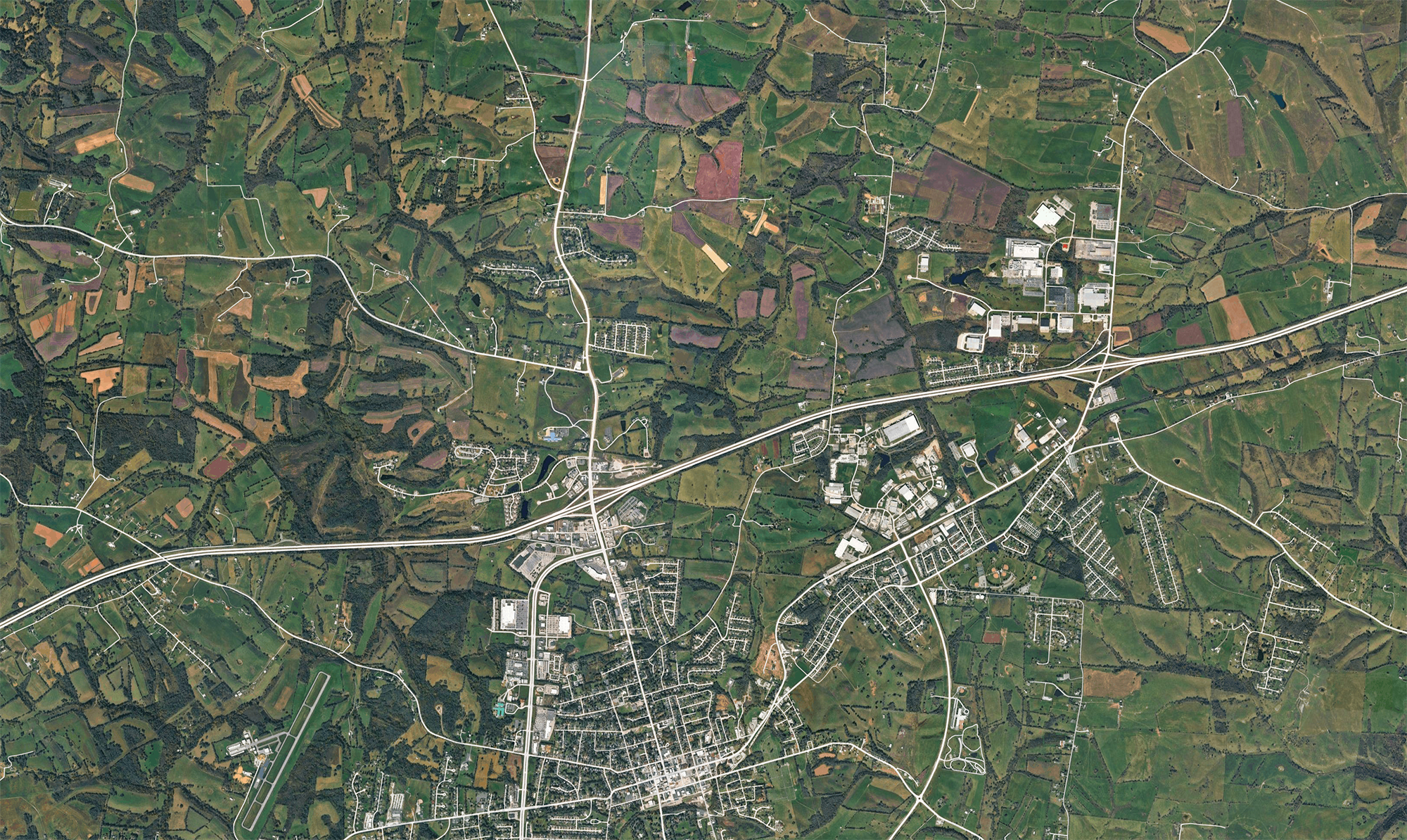
And resilience matters, because Bourbon County is consistently ranked among the top five livestock-producing counties in Kentucky. When storms wash out roads or overwhelm culverts, it delays the movement of goods, raises operating costs for farmers, and strains an agricultural sector that makes up nearly a third of our county’s economic activity.
According to Michael Williams, Judge Executive of Bourbon County, “This project strengthens Millersburg. It strengthens Bourbon County. And it moves us toward a future where our infrastructure is ready for whatever storm comes next.”
Where Love Lives, Hope Remains
“Millersburg is small and close-knit, and storms impact people you know,” said Lorrain Smoot, who has lived in Millersburg most of her life. “Friends. Neighbors. Loved ones. When water washes across Main Street, when our drains back up, when outages leave entire blocks in the dark — you worry for the people behind every front door. You carry the heartbreak of knowing the systems around you are aging faster than the town can keep up.
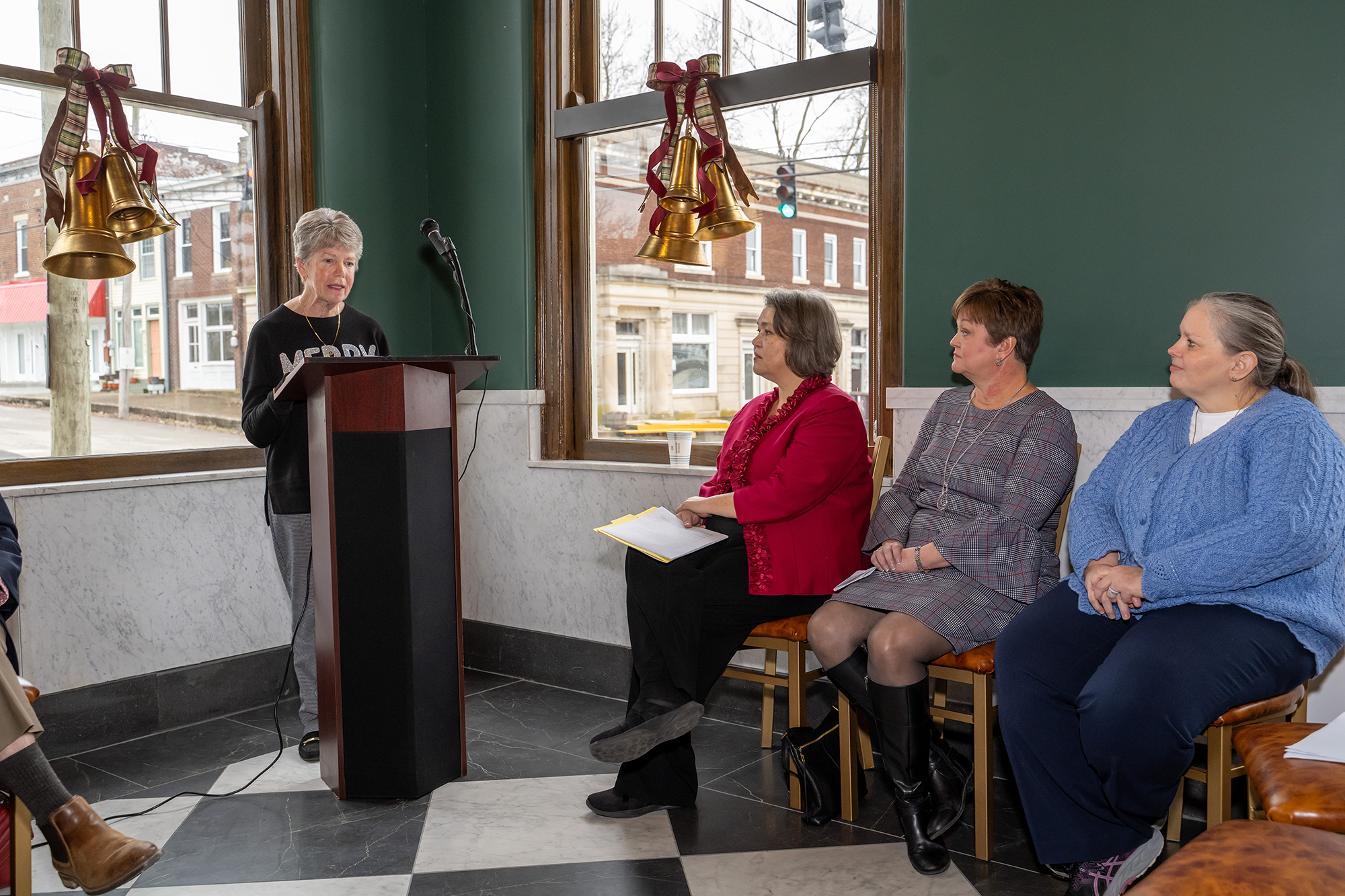
“Then came the fire in 2022 and like every one of my neighbors I wondered: How much can this little town take? We lost historic buildings, businesses, homes — and pieces of who we were.
“But when I look at this project and real investment in the heart of our town, I see prevention. I see relief. I see a community finally receiving the kind of protection larger cities can take for granted. And I see something else: hope.
“This project gives our town stability and families peace of mind. And it gives every resident — including me — the confidence that Millersburg’s best days are ahead.”
“We’re grateful to the Kentucky Division of Water for recognizing this need and partnering with us, and to Community Ventures for obtaining this funding for Millersburg,” expressed Mayor Hopkins. “Together, we’re working toward a future where Hinkston Creek—and our residents—can thrive again.