


Housing and its widespread Economic Impact
When single mom Laura Schwarz stepped into her new home for the first time,
… a whole new chapter began for her family of four, made possible by the Rural Homeownership Program.
“I had rented and moved often, not ever feeling stable or comfortable where I was,” remembers Schwarz. “Some places didn’t feel safe, and I didn’t feel truly independent when renting.”
“I wanted to live in Jessamine County, specifically in the West school district, so knowing that there was a rural program to help me get a safe and energy-efficient home in this area was a relief. My credit score was my biggest barrier, but Community Ventures helped me overcome that impediment, as well as my lack of knowledge about finances.”
Although she wasn’t raised “learning the value of money or how to save it,” Schwarz knew what she wanted for her children: a good school, a friendly neighborhood and a backyard big enough for a pool. With mentorship, she completed homeownership classes, improved her credit score, and accessed financial tools to make her mortgage affordable and her dream attainable.

The result? A house in the school district she wanted, a payment she could budget around, and a long‑term asset she intends to pass down to her children.
A house is often a family’s greatest—if not their only—asset, and a first step toward building generational wealth. The realization that by owning a home you can build your own equity instead of boosting the wealth of your landlord is great motivation.
In fact, national data shows that the typical homeowner’s wealth is hundreds of thousands of dollars higher than that of the typical renter. In 2022, the median wealth gap approached $390,000, driven largely by housing equity alone.
In Scott County, Dwunna White’s story is strikingly similar.
White is also a mother of four and has worked at the Georgetown Community Hospital for 27 years. After her divorce, White moved into an apartment with her then-young children while her ex‑husband chose to stay in the house they bought together in 1997. When he defaulted on payments and she couldn’t cover both the house and her rent, she filed for bankruptcy. Year after year she paid rent to someone else, assuming that with her credit shattered, homeownership as a single payer was out of reach.
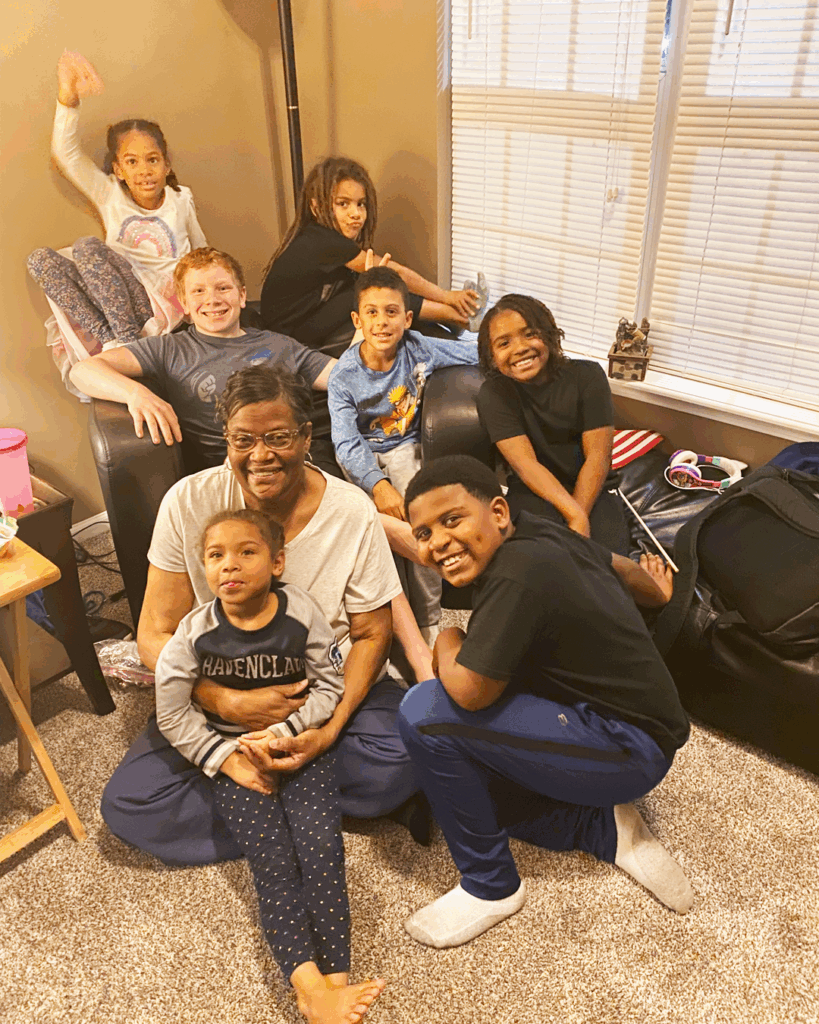
What White needed was a second chance.
“Community Ventures guided and encouraged me all the way through the process, explaining what I needed to work on to improve my credit and stressing that I needed to stay on top of every piece of information needed to complete the application process,” White said.
“Growing up, I always heard that if you filed for bankruptcy, you would never be able to buy a house, and your credit would always be bad. That entered my mind a lot. It turns out if you are diligent and work hard, you can turn things around.”
Credit counseling, budgeting, and homebuyer education led eventually to a set of keys to White’s very own home in Georgetown.
There is a quiet confidence that comes from building a better life, and profound pride in ownership. Years later, the ripple effects are tangible in their kids’ achievements and in the communities where they live.
For children, housing stability sets them up for success.
Fewer school transfers and safer, lower‑poverty neighborhoods are associated with better long‑term outlooks, including college attendance and better earning potential down the road. White has seen that play out in the lives of her now-adult children who have moved on to successful careers and homes of their own.
Stability also serves as an economic engine. Employers in small towns and rural counties need a workforce that can live near jobs and show up reliably for the long-haul. But a lack of suitable housing and housing affordability challenges often means a relocation or long commute for their workers. Across the Commonwealth, housing supply shortfalls are raising costs and constraining labor markets, particularly in rural counties where attracting new industry and businesses is paramount to economic growth and healthy communities.
Homeownership changes a family’s long-term outlook in ways that renting never can.
Monthly mortgage payments can be considered a savings plan of sorts, steadily building equity that families can later tap for college, small‑business starts, and retirement. And the net worth of a homeowner typically dwarfs that of a renter. When Laura talks about “passing the house down,” that translates as a giant headstart for her kids—the next generation.
Considering housing as economic infrastructure helps make sense of how Community Ventures’ Rural Homeownership Program works. Through the nonprofit, 37,373 new homeowners have received counseling and 1,200+ new Kentucky homeowners have been created through since Community Ventures began.
By demystifying budgeting and mortgages and helping to repair bad credit, the roadblocks that keep good renters from becoming great owners are removed. And access to down‑payment assistance and affordable loan products lowers monthly costs to ensure long-term success.
A one‑time state investment in proven pipelines to ownership—like Community Ventures’ rural and first-time homeownership and disaster recovery programs—isn’t a handout but rather a hand up for Kentuckians willing to put in the hard work to pave the path to a brighter future. It connects workers to jobs, keeps kids in classrooms, and supports local businesses. This is an investment that compounds in people, paychecks, and places.
Paying It Forward
Today, both White and Schwarz serve as Community Housing Development Organization (CHDO) board members, paying it forward by advocating for others and helping more renters become owners.
Schwarz and White can attest that stable homeownership has given their families the chance to plan, grow and dream. Now these women give back by volunteering, mentoring, and leading—proof that when we invest in housing affordability and workforce housing, we’re strengthening and growing local economies.
That’s housing as economic infrastructure—and it’s how Kentucky keeps its talent at home, attracts new business, and strengthens communities for the long haul.
White sums it up like this: “After 12 years of homeownership, I am still as excited to pull up to my house and to say it belongs to me as I was the day I first moved in. I want to share this positive experience with other single women who may think they could never own their own home. It gives me peace, it has increased my faith, and when others talk about owning a home, I can relate to them. That’s a good feeling.”