

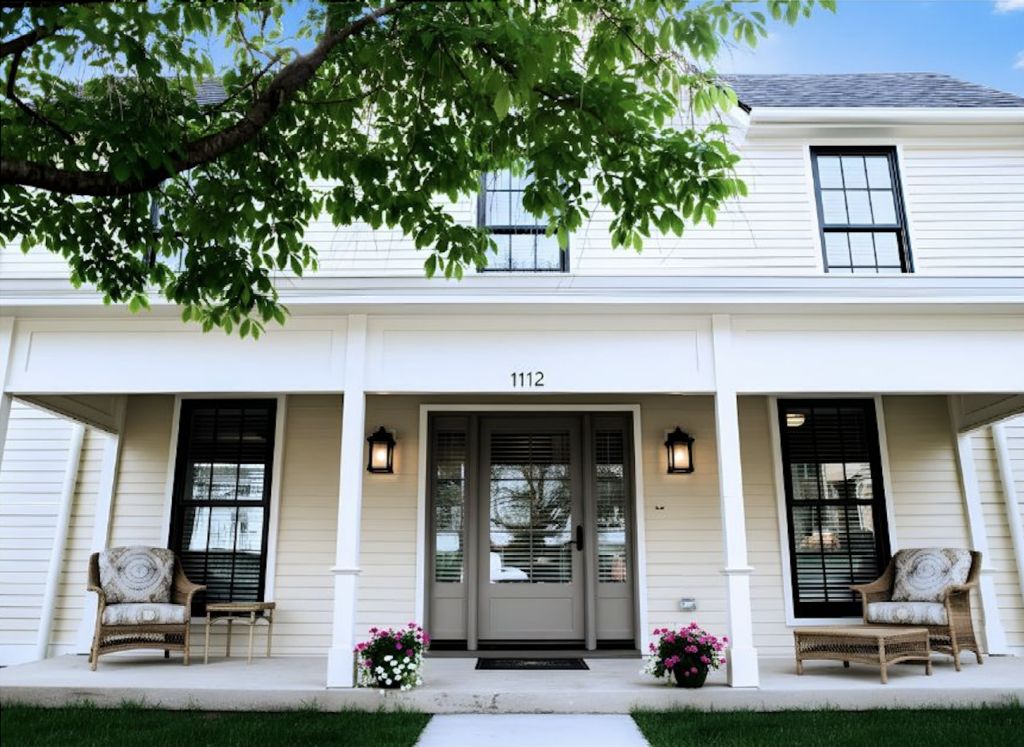
Three doors down from the campus of Mustard Seed Hill on Main Street in Millersburg, an unlikely phoenix has risen from the ashes.
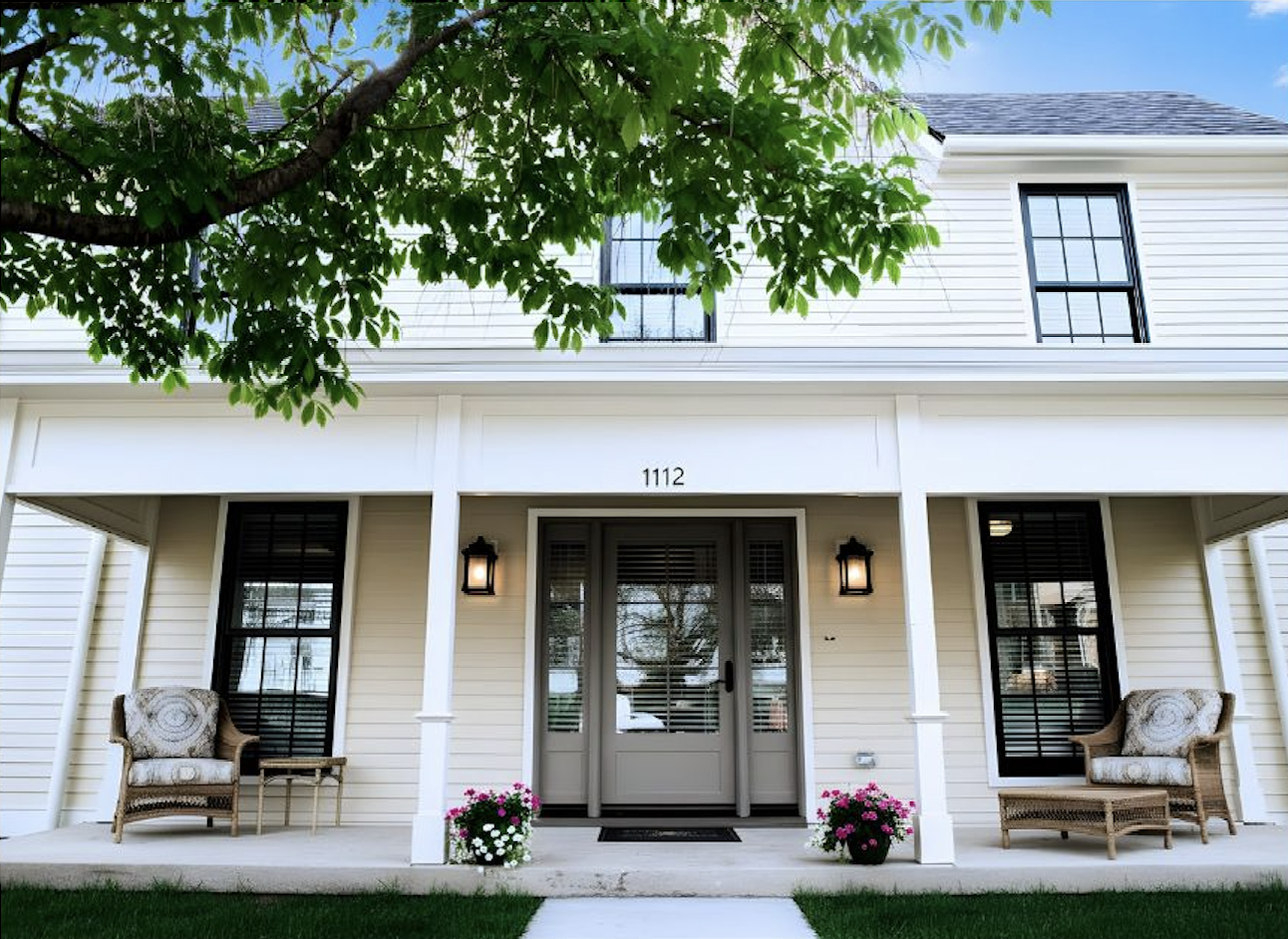
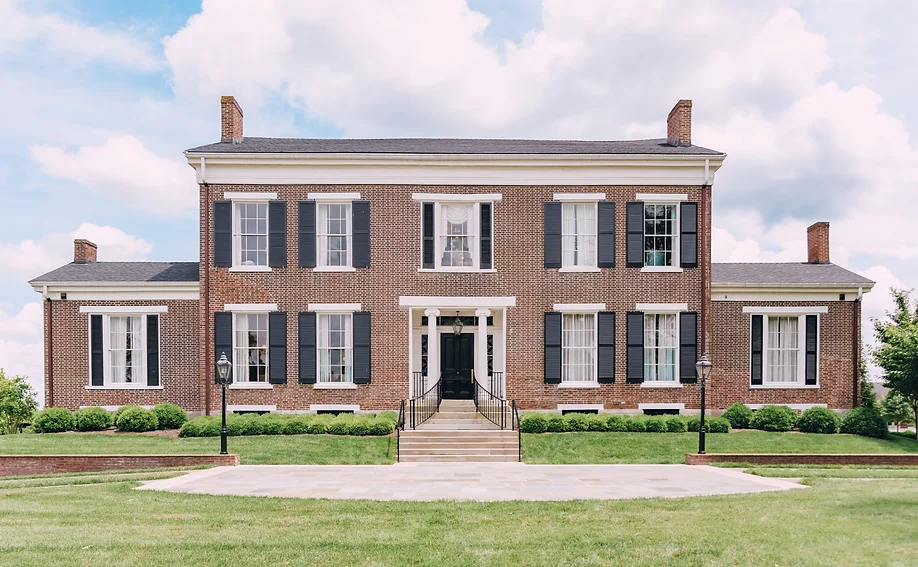
Though nearly too far gone to save, the 19-century home at 1112 Main Street has been given brand-new life. The salvaging of this dwelling adds to the growing number of reinvigorated historic homes that make up the town’s historic district. Small but functional, the newly completed project marries original elements with updated creature comforts befitting today’s lifestyle.
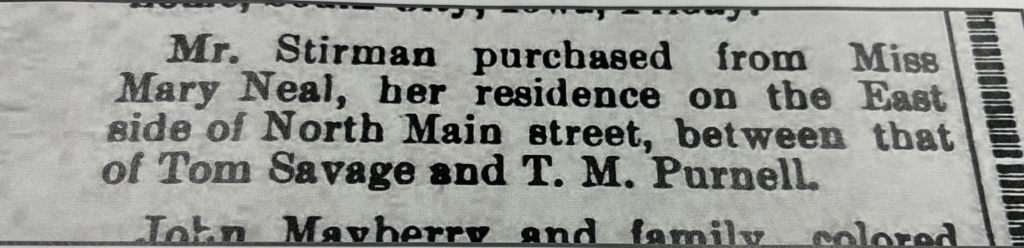
Now known as The Neal House, it was named for Mary Neal, the property’s earliest recorded owner. Neal was the first in a line of women dedicated to ensuring that the home would, throughout the years, retain its status and place in the social fabric of a town once renowned for educational institutions like the Millersburg Male and Female Academies, Kentucky WesleyanCollege and the revered Millersburg Military Institute that drew students from far and wide.
In its latest incarnation, the three-bedroom, two bath space boasts a brand-new kitchen/dining area that provides a cozy space for six guests to settle in for a few days to enjoy a step back in time to small-town rural Americana. Joining an expanding list of comfortable lodging now available in Millersburg, The Neal House serves the ever-growing numbers of visitors attending weddings or other events like the month-long celebration Christmas at Mustard Seed Hill.
The Journey Unfolds
The story of this house began generations ago, long before “re-growth” or “revitalization” were words used to describe what is happening in Millersburg.
The earliest written record of the property dates back to Ms. Neal in 1892. The daughter of Major Thomas Throckmorton, Neal was a member of one of the area’s well-established families. Neal’s death notice described her as the last of eleven Throckmorton children, and by the time she sold her Main Street property, she had lived a long life. When she sold, she was transferring not just land and a building but a place near and dear to her heart.
Records show the house already in place on the lot by 1892, indicating it may have been built in the late 19th century or possibly even earlier. Although modern records list a 1927 build date, it is thought that that almost certainly reflects later renovations or reassessments to an existing structure and not the date of the original build. If that is so, The Neal House had likely seen decades of daily life before the turn of the century arrived.
Its prominent location on Main Street between the homes of other distinguished citizens such as Tom Savage and T.M. Purnell anchored it firmly in town life. The home sat along a residential corridor filled with families whose names to this day echo through the history of Millersburg.
Elizabeth Stirman – Dedicated Teacher Meets Social Butterfly
In 1892, Mary Neal sold her house to the Stirman family. Under their ownership, the home became synonymous with Elizabeth Stirman, a public-school teacher that local newspapers of the time described as a “fine disciplinarian” who was “deeply loved by her pupils.”
And as do all inspirational educators, Stirman knew that great teaching meant much more than instruction from a book. Teaching placed Stirman at the center of community life, and she freely welcomed students into her home. As conversations and interactions carried beyond the classroom, the Stirman home was a place where character was formed and integrity developed through real-life social experiences.
Under Stirman’s watchful eye, the property itself functioned as more than a single-family residence. Records show that in addition to the main house, there was a small cottage built on the same lot which was rented out for a little extra income. Together, the dwellings operated as a small domestic compound—private, social, and economic all at once.
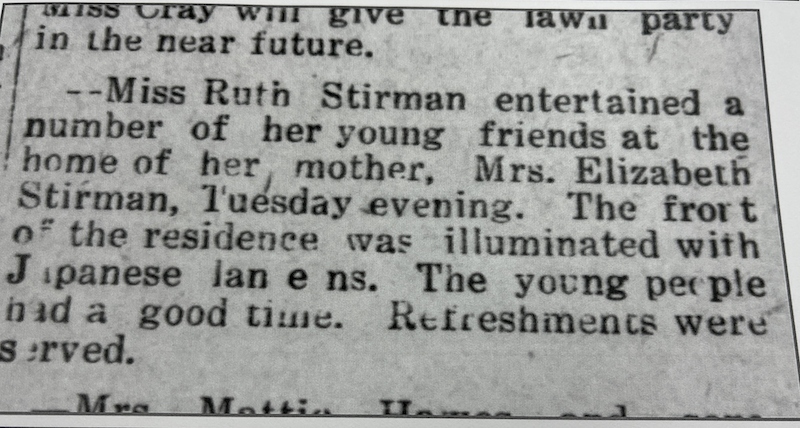
And under Stirman’s stewardship, the home brought a joyful air to the town. Newspaper snippets describe warm summer evenings where Millersburg’s social scene organically unfolded, with laughter and conversation spilling out of the house and onto the spacious back lawn as neighbors and friends gathered. As darkness fell, the yard and facade of the house would come alive with the luminous glow of Japanese lanterns.
Important Moments Captured in Time
One celebratory event, recorded for posterity, creates a snapshot of early 1900s life in the home.
On the evening that Ruth Bedinger Stirman wed Hendrick Hudson, the intimate ceremony took place inside the walls of 1112 Main Street. The paper describes the house as darkened, illuminated solely by wax tapers and candelabra. Guests were gathered in the parlor where they, along with the excited groom, anticipated the moment the bride would descend the stairway to exchange vows.
It is a sweet, sentimental image of the house in its heyday: a beautiful young woman showcased on her special day. Rooms designed for coming together in celebration and perfect for making memories that last. That feeling has been carefully preserved in this latest renovation.
Margaret Powell, Proponent of Renewal, Not Replacement
In 1911, Stirman sold the property to Margaret Powell. The sale notice stated prominently that Powell planned an extensive remodel before moving in, further adding to the “layering” of details that tell the home’s story.
This fellowship of women caretakers also established a precedent—each time the house needed renewal it was renovated, not razed. Care was taken to expand its usefulness, not erase its former lives. And the thoughtful decisions made by the ladies of 1112 Main Street over the years still echo through its rooms today.
Worth the Cost of Reclamation
When Community Ventures became involved in Millersburg’s revitalization efforts, the goal was to invest in what already existed by preserving the structures, stories, and rhythms that once defined the town. That same philosophy was applied to The Neal House.
It is always more complicated breathing new life into old buildings, because they are inherently riddled with unknowns like hidden structural issues, outdated systems, and materials and practices that often run afoul of modern construction codes. Demolition is faster. New construction is predictable. Historic preservation is neither.
Community Ventures’ approach has been consistent in Millersburg, and where possible for qualifying projects, Historic Tax Credits obtained through the Kentucky State Preservation Office have been obtained to help offset the cost of rehabilitation. These historic homes and businesses are worth the extra time and money because they can never be brought back once they are gone. And because these are the structures that capture the identity and soul of the town, losing them would be to lose the narrative thread stitching together Millersburg’s story through the decades and across generations.
Community Ventures saw The Neal House was an important piece in Millersburg’s revitalization puzzle, and a perfect fit for the ‘restore not raze’ philosophy. It had been adapted multiple times before, its bones were sound and its story was discoverable—it just needed to be resurrected and re-told.
Not Easy, But Worth the Effort
Restoring an old house requires patience and restraint. Every decision made must take into account the building’s former lives, while simultaneously envisioning how to best achieve new life and purpose.
Mike Mitchell of Mitchell Construction and Scotty True, Director of Maintenance for Community Ventures, faced the same familiar challenges they have faced working on other historic Millersburg buildings: out‑of‑square rooms, unexpected framing, and materials that demand patience and penalize haste. Modern plumbing, electrical, and climate control needs must be integrated in a way that doesn’t detract from the house’s character.
True acknowledges that Community Ventures faced a tough choice with The Neal House, with several years of disinvestment leaving very little of the dwelling left to restore. And due to current codes, if the home had been razed to rebuild, any new structure would have had to be set an additional five feet back from the neighboring property lines, creating an oddly narrow new dwelling. But by undergoing renovation, its existing footprint was “grandfathered in.”
“One interesting thing we discovered is that The Neal House quite likely started off as a single-story, one- or two-room building that someone eventually raised to a two-story,” Mitchell explained. “That would fit with our discovery of a cooking fireplace in the basement, which we were able to save, and which almost certainly dates back to the original structure.”
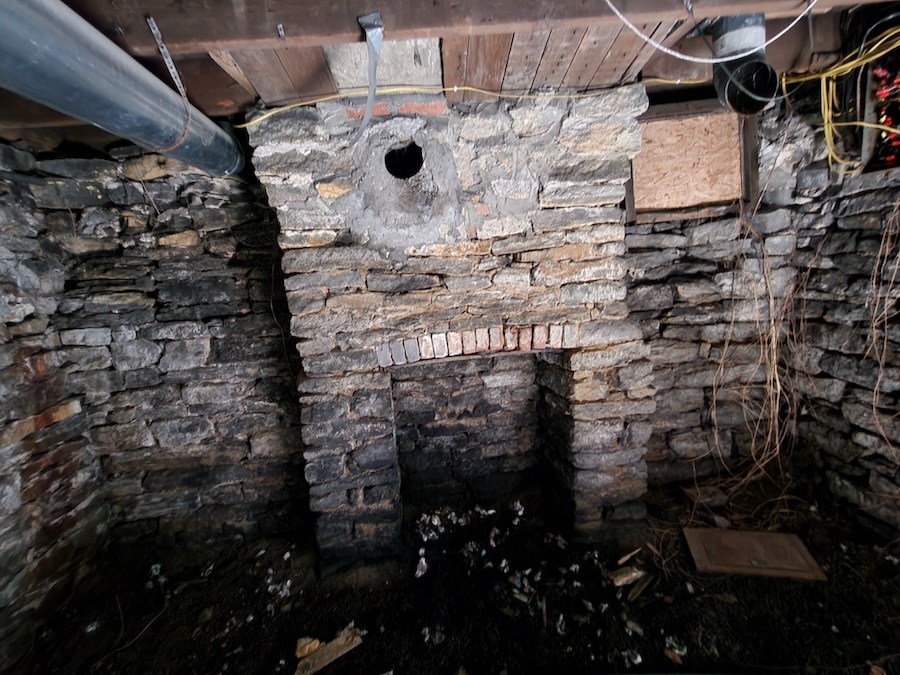
While now non-functional, the hearth and chimney were cleaned up and retained as a nod to The Neal House’s former lives.
Victoria Benson, who as President of Mustard Seed Hill provides much of the management of the town’s historic properties, is resolute: “The Neal House is a testament to what vision and grit can accomplish. While this restoration began with little more than a skeletal structure and paper-thin walls, it has been reborn as a premier destination that reflects the effortless elegance we strive for in Millersburg. This saved building is another vital piece of our town’s revitalization that allows us to welcome even more guests into our community’s history.”
Familiar, Yet Different
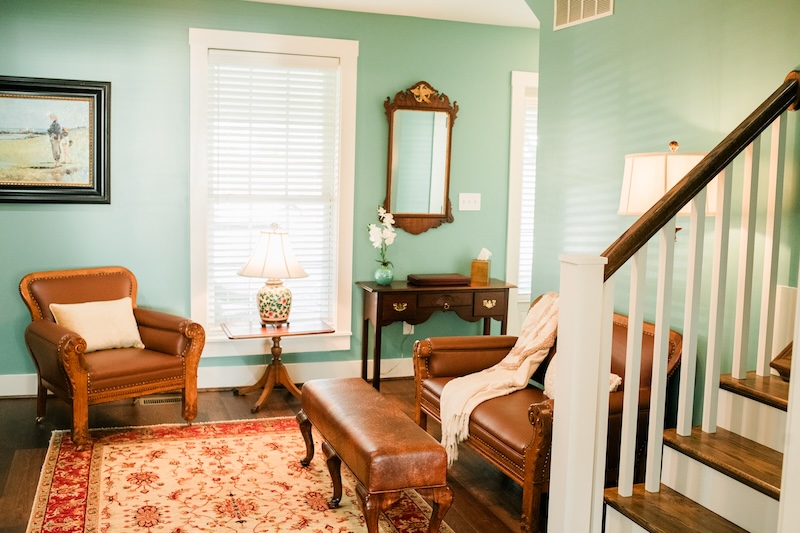
Interior design for The Neal House was led by Anita Sexton, whose work across Mustard Seed Hill properties has helped establish continuity while simultaneously ensuring that no two renovated structures feel duplicated.
Sexton layered historic elements, allowing them to shine alongside new finishes carefully chosen to bring out the best in the old. Furnishings and fabrics were chosen for warmth and durability, not trend.
A Contribution to Something Larger
The Neal House joins numerous properties restored by Community Ventures in Millersburg. Collectively, they are overseen by Mustard Seed Hill and serve to accommodate a steady increase in weddings, retreats, and overnight visitors.
The town’s revival began in 2016 with the transformation of the campus of the former Millersburg Military Institute into Mustard Seed Hill. Since opening in 2019, visitors have flocked to the campus and to Millersburg in steadily increasing numbers—from 34,000 the first year to 80,000 in 2026—well more than doubling over the past seven years.
That is a huge win for the people of Millersburg because visitors and guests eat locally. They walk Main Street. They interact with the community and they learn about Millersburg’s important contribution to Central Kentucky history. In growing numbers, they are making the trip to spend time in a town that a few years ago most people drove right past without bothering to stop.
In With the Old
The goal of Millersburg’s revitalization was never to make Millersburg into something different. It has always been about bringing back its small-town charm and one-of-a-kind character to be felt and appreciated all over again.
“The Neal House represents the heart of our mission: finding the hidden beauty in Millersburg and restoring it with purpose,” Benson explained. “To see it go from its fragile state to a stunning space for overnight guests is a beautiful reminder of why we invest so deeply in these historic properties.”
As a resident of Millersburg, CEO of Community Ventures Kevin Smith has watched the changes taking place in Millersburg in real time. “Restoring The Neal House preserved architectureand expanded our capacity to share Millersburg with the world. By taking a structure that was once nearly lost to time and transforming it into a high-end guest experience, we are directly fueling the economic momentum that has redefined our town as a must-visit Kentucky destination.”
Today, The Neal House seems to exude gratitude for all the care taken on its behalf. Almost as if it knows that although it has already amassed 130+ years of memories, its best days are yet to come.
The Neal House is now available to book through Airbnb and VRBO