

How housing solutions shaped around local needs help families, workers, seniors, and communities stay rooted across Kentucky
NeighborWorks Week 2026 celebrates the people, partnerships, and local solutions that help families access stable homes and build stronger communities.
This year’s theme, “Creating Homes, Building America,” recognizes that housing challenges are felt deeply at the local level. A family searching for an affordable place to live. A senior hoping to remain close to home. A worker commuting into a county because there are no attainable housing options nearby. A community still rebuilding after disaster.
Across Kentucky, the need for housing is real, but it does not look the same in every place.
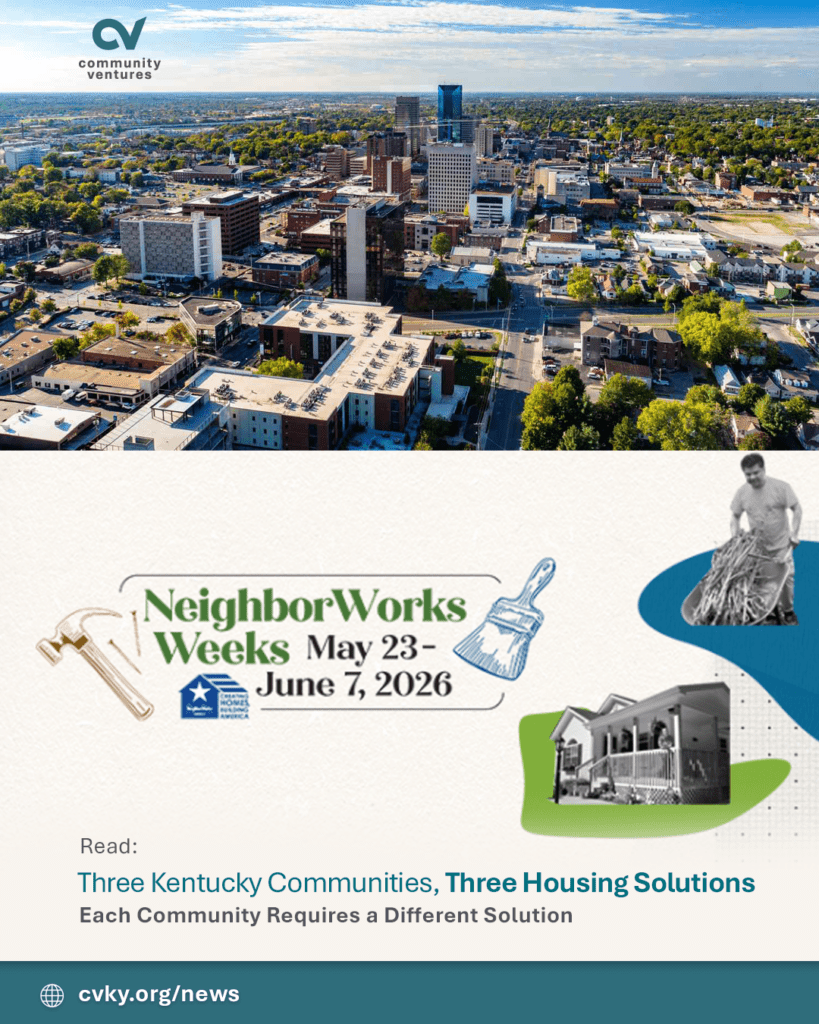
In Lexington, the need is tied to growth, limited vacancies, rising costs, and the challenge of helping workers live near the jobs that keep the city moving.
In Bourbon County and Millersburg, the need is tied to an aging population, a tight housing market, and older residents who want the opportunity to remain close to family, church, medical care, and the community they helped build.
In Fulton County, the need is tied to disaster recovery, population loss, workforce retention, and the ongoing effort to restore housing after the 2021 tornado forced families from their homes.
Each community has a different housing story.
Each one requires a different kind of solution.
Housing in Lexington: Helping Workers Live Near Opportunity
Fayette County is one of Kentucky’s strongest economic centers, but its housing market has become difficult for many working families to access.
The county needed 22,549 housing units in 2024, and that need is projected to rise to 30,823 units by 2029. The market is extremely tight, with a 1% homeowner vacancy rate and a 4% rental vacancy rate, leaving limited room for families, workers, and long-time residents looking for homes that fit their needs.
More than 96,000 people commute into Fayette County for work, and nearly half of those workers earn less than $40,000 a year.
Behind those numbers are teachers, health care workers, service employees, first responders, retail workers, hospitality staff, and young professionals who help Lexington function every day, but may struggle to live in the community where they work.
When workers cannot find housing near their jobs, the effects ripple outward.
Commutes get longer.
Household budgets get tighter.
Employers face more hiring and retention challenges.
Neighborhoods lose the stability that comes when people can live, work, shop, and participate in the same community.
Mixed-income, mixed-use developments like The MET help respond to that pressure by placing housing near employment, services, and commercial activity. This kind of model supports families and workers while also strengthening the surrounding neighborhood. Housing and small business activity begin to reinforce one another, creating a more stable corridor for residents, employers, and local entrepreneurs.
For Lexington, creating homes means helping people live closer to opportunity.
It means supporting the workforce that keeps the city strong.
It means making room for families and workers who are already contributing to the community every day.
Housing in Bourbon County: Helping Seniors Stay Close to Home
In Bourbon County and Millersburg, the housing needs look different.
Here, the story is about aging residents, limited housing options, and the importance of helping people remain connected to the place they know and love.
Many older residents have spent decades investing in their communities. They have raised families, supported churches, worked in local businesses, volunteered, paid taxes, and helped preserve the character of the place they call home.
But as housing needs change with age, many seniors find that the homes they once needed no longer fit their lives. A larger house may become difficult to maintain. Stairs, repairs, yardwork, heating costs, and accessibility needs can make aging in place more complicated. At the same time, there may be few smaller, safer, more manageable options available nearby.
When appropriate senior housing is unavailable, older residents face hard choices when housing needs change.
They may stay in homes that no longer meet their needs.
They may move away from family and familiar routines.
They may leave behind the churches, neighbors, doctors, and community connections that have shaped their lives.
Senior housing helps preserve those connections.
It gives older residents the chance to remain close to home while opening larger houses for younger families and local workers. That movement strengthens the entire housing market. Seniors gain housing that fits their stage of life, and working families gain access to homes that may otherwise remain unavailable.
Millersburg also shows how housing connects to broader rural revitalization.
Local investment, small business support, tourism, events, and downtown activity have helped bring new momentum to the community. More visitors, more entrepreneurs, and more local spending all contribute to a stronger rural economy. But for that momentum to last, people need places to live.
A community cannot grow if workers cannot find housing.
A small town cannot retain families if homes are limited or unaffordable.
A senior cannot remain rooted if there are no accessible options nearby.
For Bourbon County, creating homes means honoring the residents who have already invested their lives in the community.
It means giving seniors choice.
It means helping working families find room to stay, grow, and contribute.
Housing in Fulton County: Helping Families Recover and Workers Stay
In Fulton County, housing is directly tied to recovery.
The December 2021 tornado damaged homes, disrupted neighborhoods, and forced families to leave the places they knew. Even years later, the effects of that loss are still visible in the local housing market, workforce, and population.
Fulton County needed 317 housing units in 2024, and that need is projected to rise to 382 units by 2029.
For a rural community, those numbers carry real weight. Every lost home matters. Every family that relocates affects schools, employers, churches, local businesses, and the tax base that supports essential services.
The housing challenge in Fulton County is about helping people come home, helping workers stay close to their jobs, and giving families a realistic path to stability after disruption.
When housing is limited after a disaster, recovery becomes harder. Employers have fewer workers to hire. Families have fewer reasons to return. Young people see fewer pathways to remain. Local businesses lose customers. The community’s future becomes harder to secure.
New workforce housing helps change that trajectory.
It gives residents a place to rebuild their lives.
It gives local employers a stronger workforce base.
It gives families a reason to remain invested in the community.
It gives Fulton County a stronger foundation for recovery and long-term growth.
For Fulton County, creating homes means restoring stability after loss.
It means helping families return.
It means supporting the workers, employers, and neighborhoods that make recovery possible.
Different Communities, Shared Purpose
Lexington, Bourbon County, and Fulton County each reveal a different part of Kentucky’s housing challenge.
Lexington needs housing near job centers so workers can live closer to opportunity.
Bourbon County needs senior housing that allows older residents to remain close to home while opening existing homes for working families.
Fulton County needs workforce housing that supports disaster recovery, population stability, and long-term resilience.
The solutions are different because the communities are different.
That is the heart of effective community development.
During NeighborWorks Week 2026, the theme “Creating Homes, Building America” reminds us that housing is family stability, workforce strength, senior dignity, small business growth. It is the foundation that allows communities to remain strong across generations.
In Kentucky, creating homes means helping people stay rooted in the places they love.
It means building stronger communities, one local solution at a time.
Creating Homes. Building Kentucky.
Up Next: From Homeownership to Community Wealth
How NeighborWorks Weeks highlights the long-term impact of stable homes, financial education, and resident leadership
Don’t miss an update: